Which microscope to choose to start or deepen your observations?
Come test our instruments in-store — our advisors are available to guide you in your choice.
Stereomicroscopes
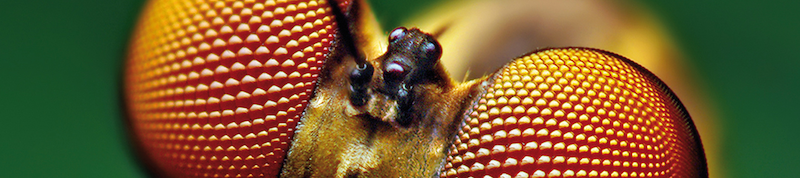 Ideal for observing objects in their natural state, without any prior preparation, stereomicroscopes provide an image in three dimensions — offering a naturalistic and immersive view of the observed subject.
They allow for the examination of a wide variety of opaque objects: insects, plant parts, minerals, gemstones, sand, electronic components… and many more. Lighting can be done by incidence (grazing light from above) or by transparency (light from below), depending on the nature of the object.
Typical magnifications: from 10x to 40x.
Cell or biological microscopes
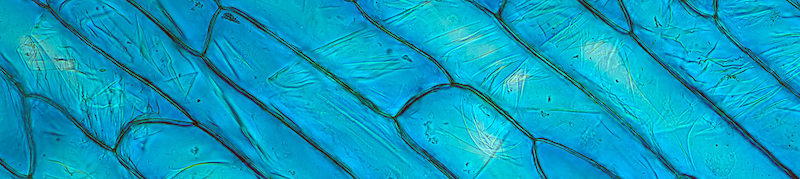 Powerful yet accessible, cell microscopes allow you to cross the limits of the visible and explore the world of cells and microorganisms invisible to the naked eye.
However, their use requires prior preparation of samples — thin section or smear — before any observation. Most are equipped with a nosepiece, allowing for easy variation of magnifications according to the desired level of detail.
Typical magnifications: from 40x to 600x.
What to choose?
The choice of a cell microscope primarily depends on the intended use and the available budget.
Magnification from 40x to 600x — for beginners or regular use. Perfectly suited for observing plant sections, crystals, or simple preparations. An excellent starting point for beginners and knowledgeable amateurs.
Magnification over 600x — for experienced users. Reserved for more advanced observations, these models are aimed at an informed audience, already possessing a good mastery of preparation and observation techniques.
How to calculate magnification?
The total magnification of a microscope is obtained by multiplying the power of the eyepiece by that of the objective:
Magnification = Eyepiece x Objective
Example: eyepiece 10x × objective 40x = 400x
Beyond 600x, the image tends to darken and becomes difficult to focus sharply. That’s why instruments with standard magnifications — from 40x to 600x — offer the best observation conditions: a bright, sharp, and pleasant image to explore.
Portable microscopes
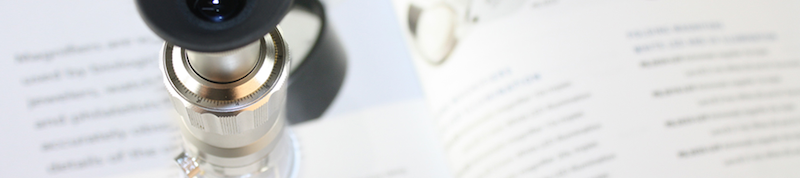 Portable and compact microscopes, ideal for close observation of plants, insects, and small objects — easy to take out into the field for discoveries in nature. Particularly suited for observing flat subjects or objects.
Typical magnifications: from 20x to 60x.