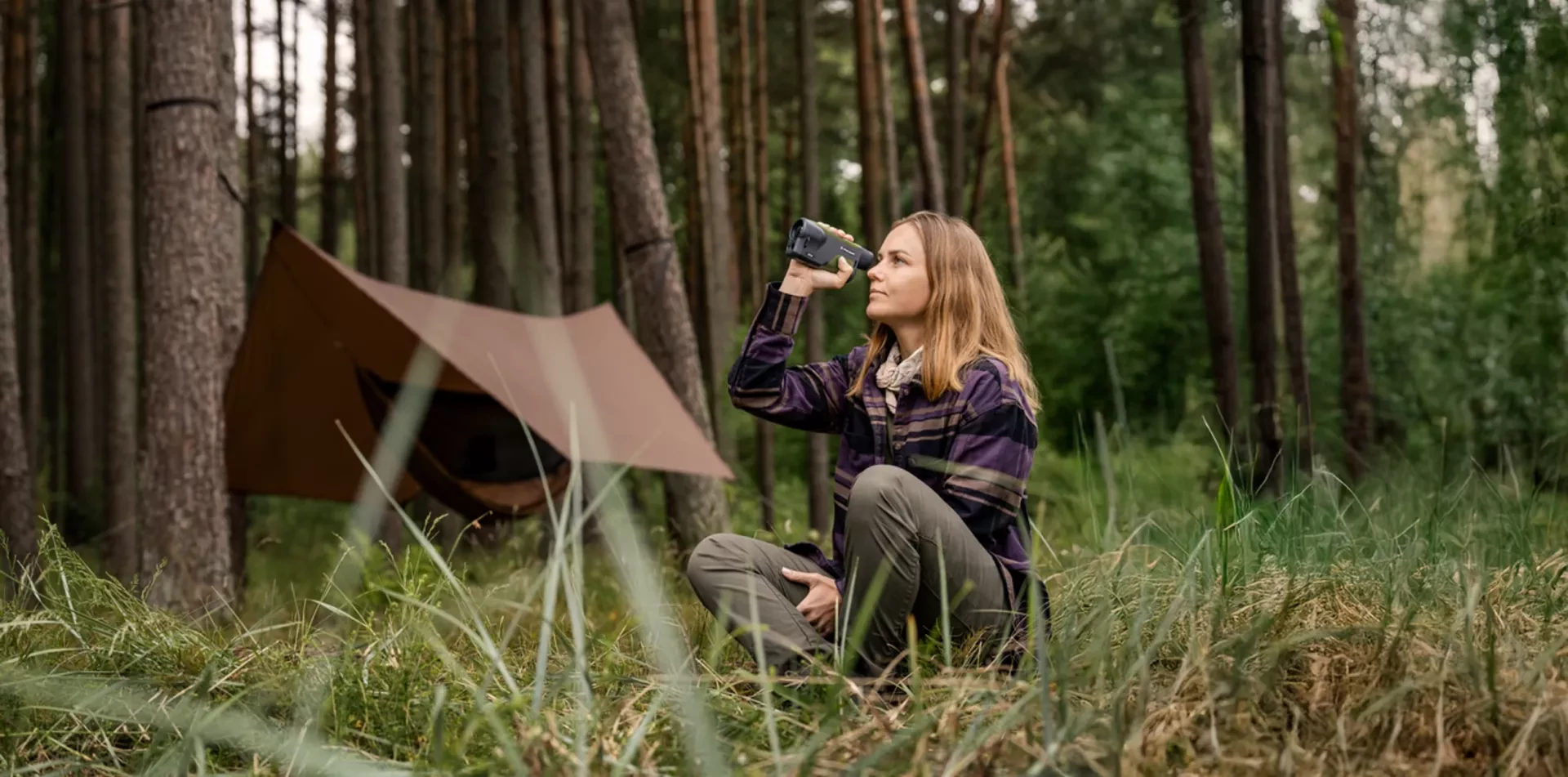
What is a thermal camera?
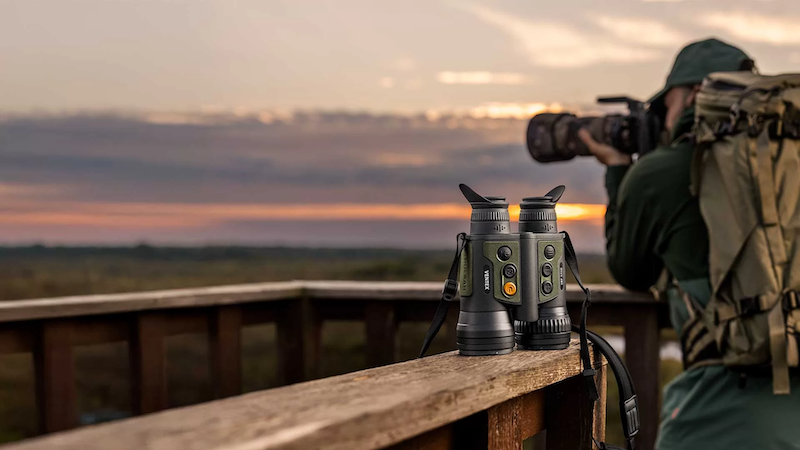 A thermal camera is an optical instrument that detection heat rather than visible light. Unlike a conventional camera, it does not capture light rays but the infrared radiation naturally emitted by any object or living being.
How does it work?
Any body whose temperature is above absolute zero (-273°C) emits heat. The thermal camera detects these temperature differences and translates them into a visible image using color palettes — warm areas typically appearing in white, yellow, or red, and cold areas in blue or black.
What it allows
- See in total darkness — without any light source
- Detect an animal or a person hidden in vegetation
- Function during the day and at night — regardless of lighting conditions
- Observe without disturbing — from a distance and in silence
Instruments designed for ornithologists and wildlife enthusiasts, in all conditions.
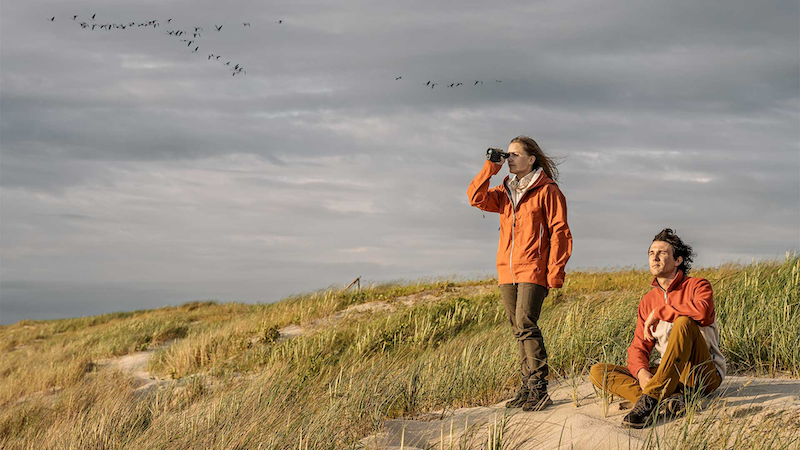 Ornithologists often think that thermal optics are only useful at night. This is far from the case. Thermal technology is a versatile tool, as valuable at dawn as it is at dusk, or in broad daylight. Devices transform daytime birdwatching — they complement your practice while opening a new window to the wild.
Unlike night vision — which captures and amplifies existing ambient light (stars, moon) — thermal optics rely on a fundamentally different principle. It detects the infrared radiation (thermal signature) naturally emitted by any object whose temperature is above absolute zero and translates these heat differences into a visible image using color palettes — highlighting warm subjects against cooler backgrounds.
Regardless of the time of day or night, a thermal device reveals even the most discreet inhabitants of the forest.
The selection criteria for a thermal camera
The sensor resolution
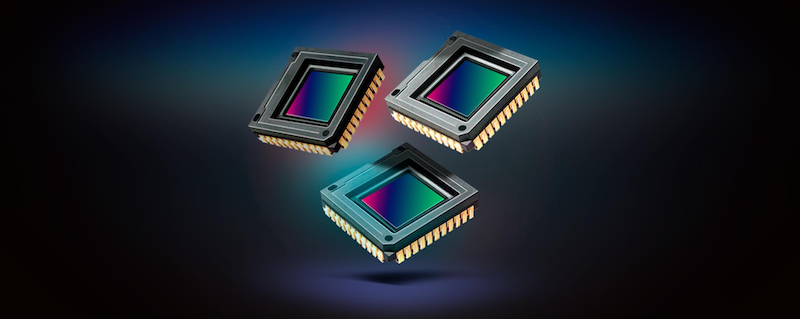 This is the most important criterion. It determines the sharpness and precision of the thermal image. The higher the resolution, the clearer the details.
160 x 120 px | Entry-level, simple detection
320 x 240 px | Good quality/price compromise
640 x 480 px | High definition, precise observation.
To prefer: for optimal image quality, a high-definition sensor.
The thermal sensitivity (NETD)
Expressed in millikelvins (mK), it measures the device's ability to detect small temperature differences. The lower the value, the better the sensitivity — ideal for detecting an animal hidden in vegetation.
The image processing software
Advanced algorithms optimize image quality to reproduce sharp and precise details.
The color palettes
The best cameras offer several palettes — warm white, warm black, rainbow — to adapt to observation conditions.
The weight and bulk
For the field, lightness is a major asset — especially during long observation sessions.
The connectivity
Some models offer a Wi-Fi or Bluetooth connection to share images in real-time or control the device from a smartphone.
💡 Our advice: For ornithology and wildlife observation, prioritize a high resolution, a good thermal sensitivity, and a magnification suitable for the usual observation distance.